One Purpose. A Better Life.
🎁 Special Discount until 5th Jan. 2026
“This is a masterpiece.”
—Morgan Housel, Author, Psychology of Money
“Discover the extraordinary within.”
—Manish Chokhani, Director, Enam Holdings

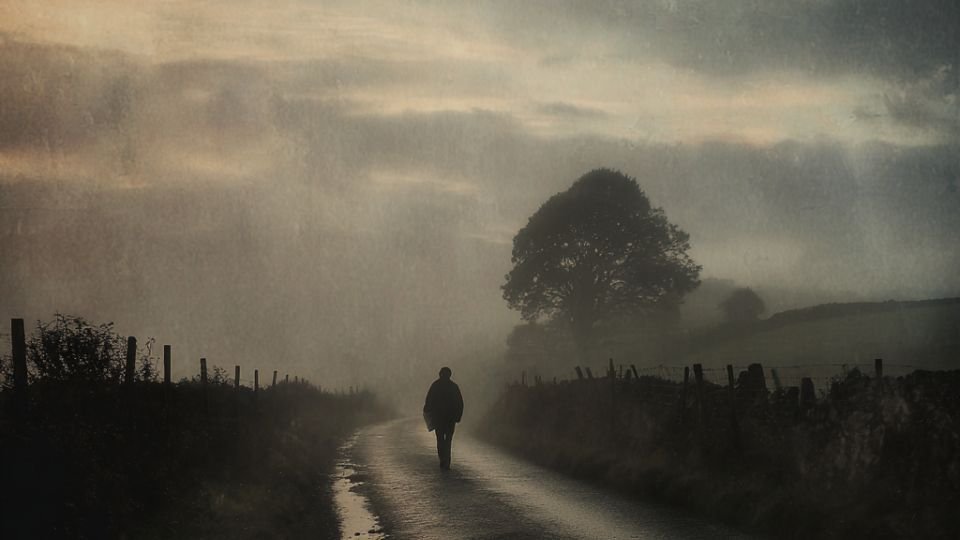
As the year winds down, it feels like leaving a crowded market at dusk and heading home after a long, noisy day. But for me, the end of 2025 has been quiet for a different reason. A personal tragedy involving a close friend recently reminded me of life’s total uncertainty. It was the kind of news that stops your world and makes every “market update” or “annual goal” feel incredibly small, and also serves as a brutal reminder of how thin the line is between everything being okay and everything changing forever.
In any case, like a river finally reaching the quiet of the plains, I’m using this moment to look back at the lessons that actually mattered this year—the ones that helped me stay standing when the news was hard to take.
I’ve gathered ten passages that served as a North Star. They represent the “Ten Big Ideas” I’ve promised myself to learn, relearn, and carry forward. I hope you find them valuable too.
1. Ego
An individual human existence should be like a river—small at first, narrowly contained within its banks, and rushing passionately past rocks and over waterfalls. Gradually the river grows wider, the banks recede, the waters flow more quietly, and in the end, without any visible break, they become merged in the sea, and painlessly lose their individual being. — Bertrand Russell
In youth, we’re always in a hurry to get somewhere. But eventually, you realize the world doesn’t revolve around your pace. In investing, this means moving from “I need to beat the market” to “I want to support my life’s purpose.” In life, it means realising that my joys are not separate from everyone else’s. I’m learning to just flow a bit more quietly.
2. Humility
Humility amounts to an understanding that the world is not divided into good and bad people, but rather it is made up of all manner of individuals, each broken in their own way, each caught up in the common human struggle and each having the capacity to do both terrible and beautiful things. — Nick Cave
This passage changed the way I think about personal conflict. We judge others by their worst traits while judging ourselves by our best intentions. It’s better to just realise we’re all a bit of a mess. Acknowledging my own imperfections keeps me humble. When we stop expecting others to be perfect, life gets a lot easier.
3. Equanimity
In my youth I was but the slave of the high tide and the ebb tide of the sea, and the prisoner of half moons and full moons. Today I stand at this shore and I rise not nor do I go down. — Kahlil Gibran
This is the goal: not losing your mind when things go sideways. In the markets, it is easy to obsess over the green and red charts, feeling great one day and miserable the next. But Gibran suggests a third state: presence. Just watching the waves without getting swept away. The lesson is to decouple my peace of mind from a P&L statement. The market will rise and fall, and so will life. I’m trying to stay on the shore, as a witness rather than a slave.
4. Attention
Instructions for living a life. Pay attention. Be astonished. Tell about it. — Mary Oliver
If attention is the ultimate asset, I spent too much of 2025 on “junk bonds”—meaningless scrolling. Oliver’s instruction is a good reminder for the coming year. To “pay attention” is to find value where others see nothing. It’s about actually noticing the world. After all, attention is the only thing we truly own. I need to spend it as carefully as money.
5. Freedom
Between stimulus and response there is a space. In that space is our power to choose our response. In our response lies our growth and our freedom. — Viktor Frankl
Whether it is a market crash or a personal setback, these things are merely triggers. Real growth is found in the “space” we allow before reacting. This is where the real win is—not in the action itself, but in the restraint. Widening this gap is the essence of freedom, which is not about a life without problems, but the power to choose how those problems affect the soul.
6. Questions
I beg you, to have patience with everything unresolved in your heart… try to love the questions themselves. Live the questions now. Perhaps then, someday far in the future, you will gradually… live your way into the answer. — Rainer Maria Rilke
We are always looking for “answers” to the big questions of life. But maybe it’s okay to just sit with the questions for a while. Patience isn’t just waiting, but the capacity to be comfortable in uncertainty. You can’t force the future to happen faster. Like compound interest, the most profound changes happen slowly. The key is to trust the process.
7. Character
Whatever happens to you from without, keep your mind free from emotional disturbance; and whatever you do from within, let it be done with justice and for the common good. — Marcus Aurelius
The world is the weather; my character is how I handle it. Marcus Aurelius reminds us that our primary duty is to keep our internal world calm. Whether the portfolio is up or down, who I am shouldn’t change. The path forward is to keep my values regardless of what the world throws my way.
8. Resilience
I can think. I can wait. I can fast. — Hermann Hesse
These are the three pillars of a resilient life. To think is to avoid the herd; to wait is to master time; to fast is to prove that you are not a slave to your comforts. In 2025, I practiced these sporadically. In 2026, I’m going to try to take them more seriously. If you can wait and do without things for a bit, you’re pretty much untouchable.
9. Love
Love takes off the masks that we fear we cannot live without and know we cannot live within… I use the word ‘love’ here… in the tough and universal sense of quest and daring and growth. — James Baldwin
We confuse “safety” with “security.” We wear masks to pretend we have it all figured out so we don’t get hurt. But Baldwin says that these masks are prisons, and exhausting. Real growth comes from the moments we are vulnerable enough to admit we don’t know the answer or that we need help.
10. Joy
I’ll leave you with these words from Kabir. They’ve been stuck in my head lately, and honestly, they say more than all the other nine points combined.
मन लाग्यो मेरो यार फ़कीरी में।
जो सुख पाऊँ राम भजन में, सो सुख नाहिं अमीरी में।
भला बुरा सब का सुन लीजै, कर गुजरान गरीबी में।
आखिर यह तन ख़ाक मिलेगा, कहाँ फिरत मग़रूरी में।
कहत कबीर सुनो भई साधो, साहिब मिले सबूरी में॥
We spend so much time chasing ameeri (wealth), thinking it’s the finish line. But Kabir says the real peace is in fakeeri. This doesn’t mean you have to be poor; it just means being free from the need for more. It’s that feeling when you stop checking your portfolio every ten minutes and realise you’re actually doing well right now.
The most important part is the line: “Sahib mile saboori mein.” Kabir reminds us that the “truth” (or the sahib) is only found in saboori, which is just a beautiful word for patience.
He also asks a very blunt question: “Kahan phirat magroori mein?” Why are we walking around with so much ego? At the end of the day, everything we’ve built, including our bank balance, the titles, and the pride, turn to ash (khaak).
So, my plan for 2026 is simple: Less magroori (ego) and more saboori (patience).
Into 2026
The river keeps moving. If this year taught me anything, it’s that we have no control over the tides, only over how we stand on the shore. We don’t need all the answers for what lies ahead; we only need enough light to see the next step.
Here’s to a year of cherishing the life we have and finding peace in the middle of the noise. Happy New Year.
One Purpose. A Better Life.
🎁 Special Discount until 5th Jan. 2026
“This is a masterpiece.”
—Morgan Housel, Author, Psychology of Money

“Discover the extraordinary within.”
—Manish Chokhani, Director, Enam Holdings