

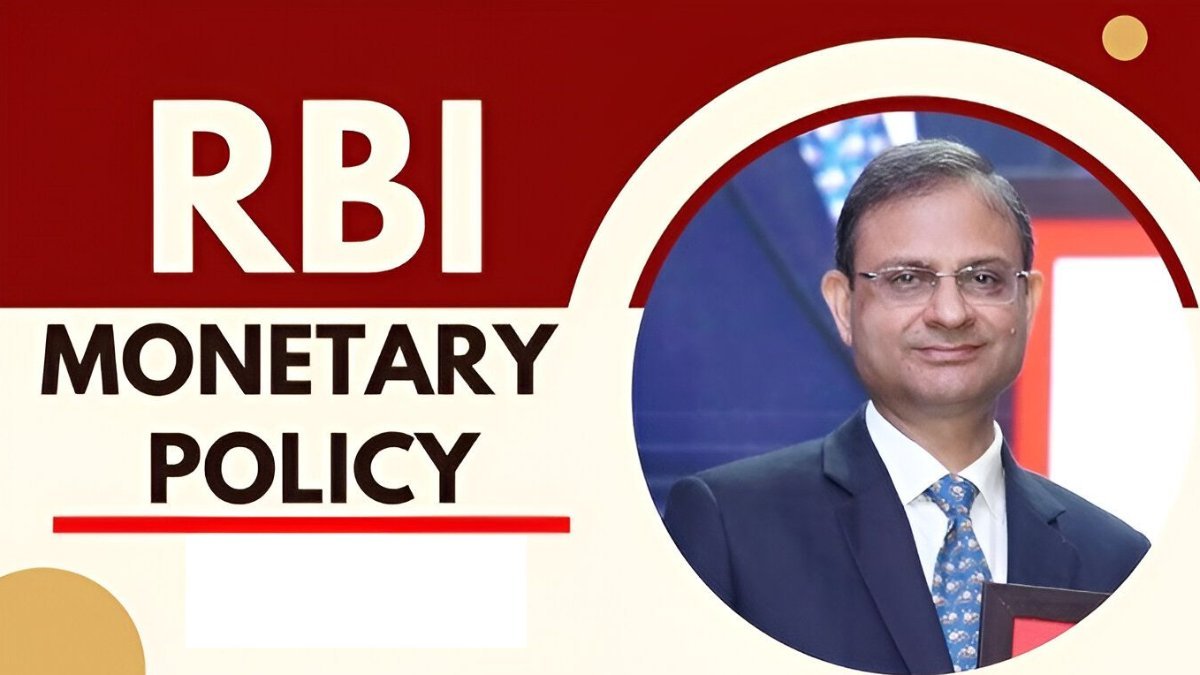
The Reserve Bank of India (RBI) kept the repo rate unchanged at 5.25% in its first monetary policy announcement of 2026, in line with broad market expectations.
The Monetary Policy Committee (MPC) under RBI Governor Sanjay Malhotra, took this decision for policy continuity amid stable inflation and strong economic growth.
The governor also announced that along with the stable repo rate, the SDF rate & the MSF rate will remain unchanged at 5% & 5.5%
Why RBI Kept Repo Rate Steady
The RBI monetary policy February 2026 decision is mainly because of improving macroeconomic conditions. The central bank has already cut the repo rate multiple times in 2025 by a cumulative of 125 basis points or 1.25% during the ongoing easing cycle, helping reduce loan EMIs and support consumption.
At the same time, CPI inflation has remained benign, touching its lowest level in the current data series in October 2025, giving policymakers room to pause. With inflation under control and earlier rate cuts still transmitting through the economy, the MPC opted to maintain the repo rate at 5.25%.
RBI Policy Impact on FD Rates
For depositors, the current pause could be a window to lock in higher fixed deposit (FD) rates before any potential future rate cuts later in the year, depending on inflation trends.
“The RBI’s decision to keep the repo rate unchanged offers much-needed stability for investors amid global uncertainty. Historically, repo rate cuts are followed by reductions in FD rates, so this pause creates a timely window for investors to lock in attractive fixed deposit returns. With rates such as 7.75% offered by Slice and 7.5% from Utkarsh Bank still available, fixed deposits continue to be a compelling option for those seeking predictable and stable returns.” said Saurabh Jain, Co-founder & CEO, Stable Money
The decision to hold the repo rate steady suggests that bank deposit rates may remain stable in the near term. However, economists caution that if inflation stays benign and the RBI resumes rate cuts in future policy meetings, FD rates in India could gradually soften.
India Growth Outlook Remains Strong
India’s GDP growth has exceeded expectations this fiscal year, with the economy projected to expand above 7%, allowing the country to retain its position as the world’s fastest-growing major economy.
Global Trade Developments Support Outlook
Governor Malhotra also mentioned that, since the previous RBI policy meeting in December, India has finalised trade agreements with the US and the European Union, which significantly improves the external environment.
Under the new arrangements, US tariffs on Indian goods have been reduced to about 18% from as high as 50%, placing India among the lowest-tariffed Asian exporters in the American market. This will now boost exports, strengthen manufacturing demand, and support overall economic momentum, factors that likely influenced the RBI’s rate-pause decision.
![Read more about the article Why Bajaj Auto Share is Falling: Understanding the Market Reaction [17-October-2024]](https://coinfinity.in/wp-content/uploads/2024/10/Why-Bajaj-Auto-Share-is-Falling-Thumbnail-300x179.png)